
Spring 2026
The balance between commerce and recreation, always tricky for urban waterways, tipped long ago on the polluted lower stretches of the Passaic River. In sections of Newark, the river and its tributaries are channelized and mostly lost to view, obscured by dense tree stands and scrubby undergrowth.
NJIT’s Albert Dorman Honors College (ADHC) wants to reconnect city neighborhoods to some of these forgotten sections of the Passaic River system. This spring, the college collaborated with the Newark College of Engineering (NCE) to launch the course, “Service Learning for Engineers: Life on the River,” composed of student-led water remediation, ecology and infrastructure design projects.
“While people may believe it is unrealistic to fish, swim or boat in the Lower Passaic, this project can not only prove that it is possible, but also provide detailed information on how to achieve it,” said Ligaya Manalastas ’26, an environmental science major who leads a water sampling team. “In collaboration with the community engagement team, we will work closely with residents to learn how they wish to interact with the site, address questions about water quality and offer a sense of hope and reassurance.”
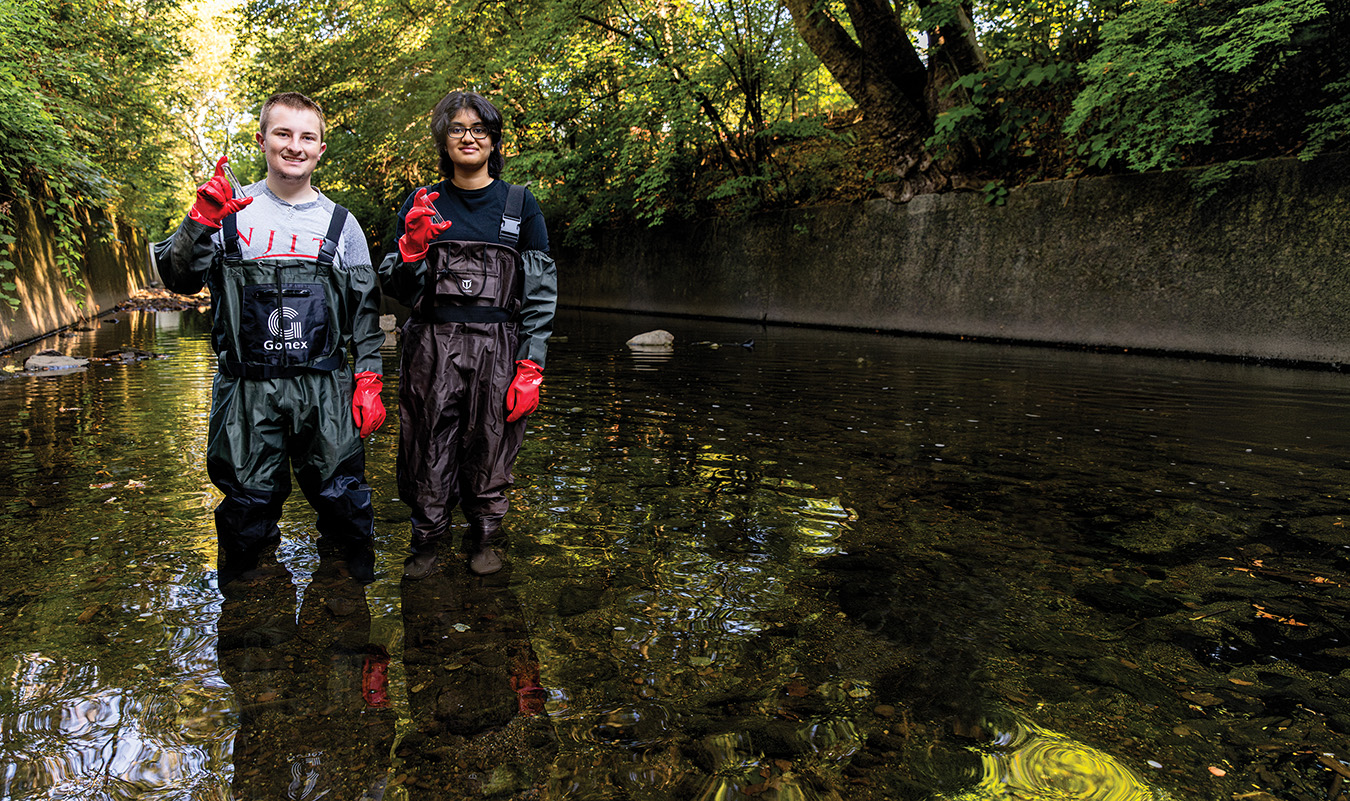
Other students are working with local community members and advocacy groups to enliven the underutilized space along the Second River, a tributary of the Passaic. Proposed designs for the waterfront include a network of seating areas, floating wetlands to allow plants to grow and the integration of chemical-free remediation materials such as biochar.
“I hope students come away with a better understanding of the Second River — its history; its ecology, meaning the status of its soil, water quality and trees; and the history of the surrounding communities,” said Emily Tancredi-Brice Agbenyega, a university lecturer in civic engagement who teaches the course with Ashish Borgaonkar ’11, an assistant professor of engineering education in the School of Applied Engineering and Technology.
“The Second River has been a repository for stormwater overflow, but it shouldn’t be used solely for that purpose,” Agbenyega noted. “People have conducted health studies on the Passaic for decades, but paid less attention to this tributary. That’s why it’s a good place for our students to start.”
Teamwork: Putting the Second River First
Preparation for the course began last year with six student research projects, all funded by the Albert and Joan Dorman Family Foundation, that explored diverse restoration approaches along a half-mile section of the Second River.
Five teams of students are now expanding on the 2025 research initiatives, developing remediation systems as well as restoration and beautification projects, in consultation with community members and environmental organizations. Their areas are water sampling; water remediation; landscaping and architecture to restore access to the river; the creation of an immersive VR environment that will visualize the river and its banks and include data on its history and ecology as an urban waterway; and community engagement.
Last semester, Tristan Cunanan ’29, an architecture major, identified locations along the river’s banks in Branch Brook Park where NJIT students and their partners could create community amenities, such as boardwalks and seating. He calls the hidden stretch of the Second River a “lost opportunity.”
“Other sections of the park have playgrounds, fields and running paths,” Cunanan said. “I questioned if many people knew it existed, as there is nothing now to entice them.”
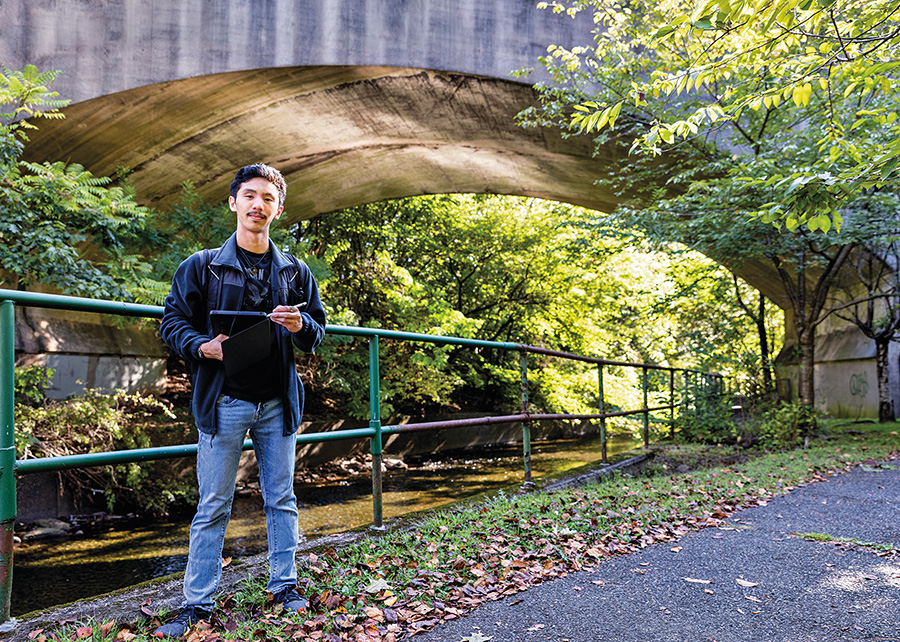
Now on a team of nine, he is working on several proposals, including rain gardens. Composed of plants such as swamp milkweed, blue flag iris and switchgrass, they would mitigate flooding, absorb pollutants, beautify the site and attract pollinators. The group is also considering an elevated, permeable boardwalk that would replace the cracked asphalt path, allowing rain to soak through, and human-made floating wetlands that hold native wetlands plants. Once they develop prototypes, the group plans to submit their proposal to the National Oceanic and Atmospheric Administration for possible additional funding.
Divija Gullapalli ’28 and Tyler Oberholtzer ’28 spent the fall semester testing the effectiveness of an inexpensive, chemical-free treatment material, an oak wood biochar, as an alternative to activated carbon for removing industrial contaminants, such as pesticides and PFAS, from city streams.
“Activated carbon is very expensive. Many communities with water pollution cannot afford it. Biochar, which can be made from the trees around us, is much cheaper,” Oberholtzer noted. “We first tested it on glyphosate, a common herbicide agent, and found its performance in the range of activated carbon.”
A three-member team is now conducting further studies to quantify the material’s ability to adsorb chemicals in contaminated water and sediment over various exposure periods: from two hours to four weeks. The group is coordinating with the water sampling team to set up a schedule for routine collection, followed by experiments in the lab.
Out of the Classroom, Into the Community
The community engagement team is assessing public perceptions of the river, the problems it creates for residents and their appetite for improvements. They note that increased flooding and illegal dumping in the area have generated negative views. They share their findings with all of the other teams.
“Many seniors in the community remember playing and swimming in the Second River during the summer, before it became highly industrialized and unsafe. Engaging with this community will be very helpful in understanding how the river has changed over time, especially in the past 50 years, and what concerns have arisen,” said Avery Green ’30, a freshman architecture student who leads the team.
“Another important community we are targeting is children and their families. Understanding their view of the river, and how we could improve it to make it an enjoyable space, will be important in creating long-lasting benefits from our projects.”
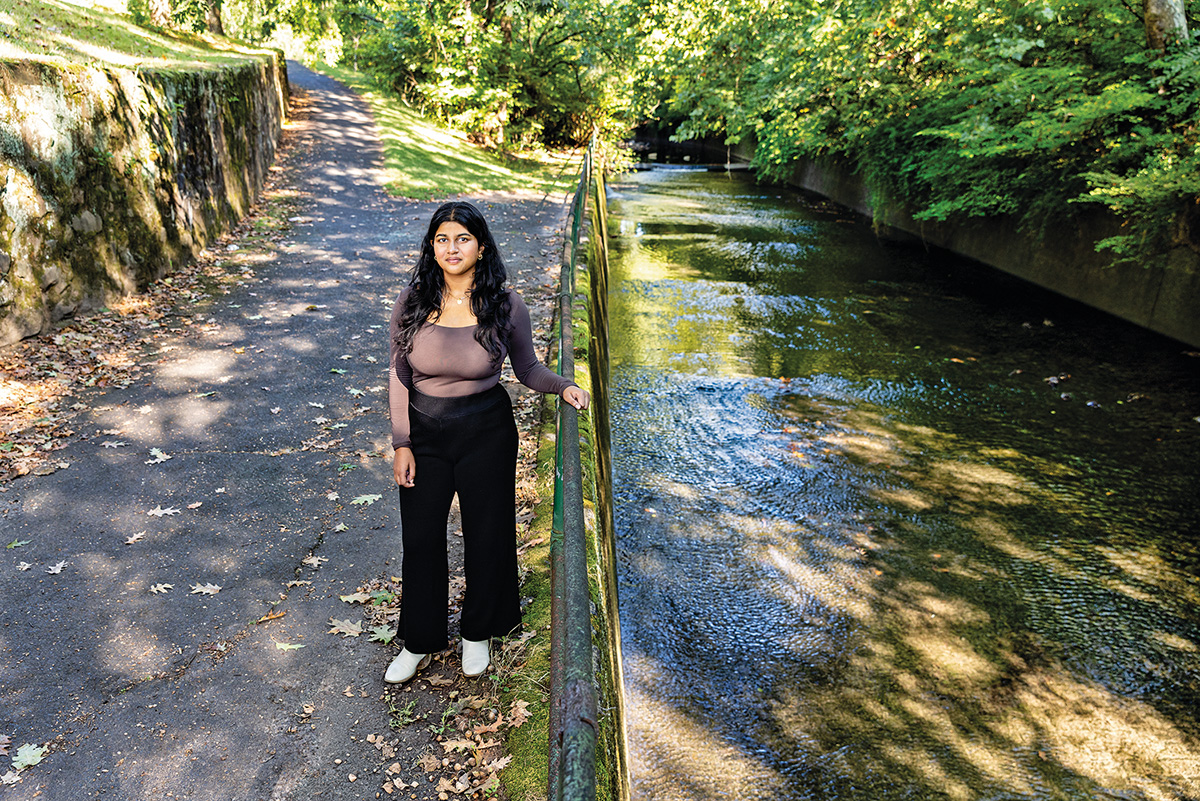 The visualization team is developing a digital tool that will integrate programs such as ArcGIS, Google Earth, and CloudPano to transform raw data into a 360° VR experience. There is currently no place, they say, for residents, scientists, policymakers and student researchers to view data about pollution in the river to better understand and remediate it.
“Without a centralized hub, it is difficult for different teams to visualize how their filtration systems and garden designs fit into the river’s landscape and historical context,” noted Pooja Datir ’27, a biological science major who leads the VR team. “Moreover, the river’s history and environmental data are currently not interpretable to the public. Our goal is to move this information out of documents and into a 360° VR environment.”
The Life on the River project satisfies the service learning competency in NJIT’s Grand Challenges Scholar Program (GCSP), an intense, experiential learning initiative endorsed by the National Academy of Engineering (NAE), that encourages students to tackle what the academy has identified as 14 major challenges in engineering. It motivates them to go beyond the traditional classroom experience to embrace experiential learning through research, service learning and volunteer work, and by developing a business-focused, entrepreneurial mindset, said Borgaonkar, who directs the program.
“Securing meaningful and substantial service learning opportunities can be challenging, however,” he noted. “Some GCSP scholars were able to leverage various experiences, such as a semester abroad or participation in leadership roles in projects run by Engineers Without Borders, to satisfy the requirement, but others couldn’t easily obtain these. I came up with the idea of offering a special section of the ENGR 493 course that would allow them to gain this experience at NJIT, while helping solve a community problem.”
Borgaonkar discovered last year that Agbenyega was also developing a service learning course and so they joined forces. The course exemplifies ADHC’s commitment to fostering sustainability in Newark and engages students in tackling an urban infrastructure issue — one of the NAE’s 14 grand challenges — at a small scale, Agbenyega explained. This year’s course, now open to students outside of the Honors College and NCE, has drawn architects and others.
The funding from the Dorman Foundation continues the legacy of giving back to the community established long ago by Albert Dorman ’45, Agbenyega said, adding, “The current leaders of the Foundation, Laura Dorman, Kenneth Dorman and Richard Dorman, the children of Albert and Joan Dorman, have a deep interest in sustainability and a desire to positively impact students at NJIT and the city of Newark. Joan Dorman continues to play an active role, and Laura Dorman is a member of the Honors College Board of Visitors.”
Stewart Abrams, a senior consultant at Langan Engineering who is also on the board, advised the college on the development of the course, mentored the team of students conducting the initial research and continues to support it.
