Spring 2026
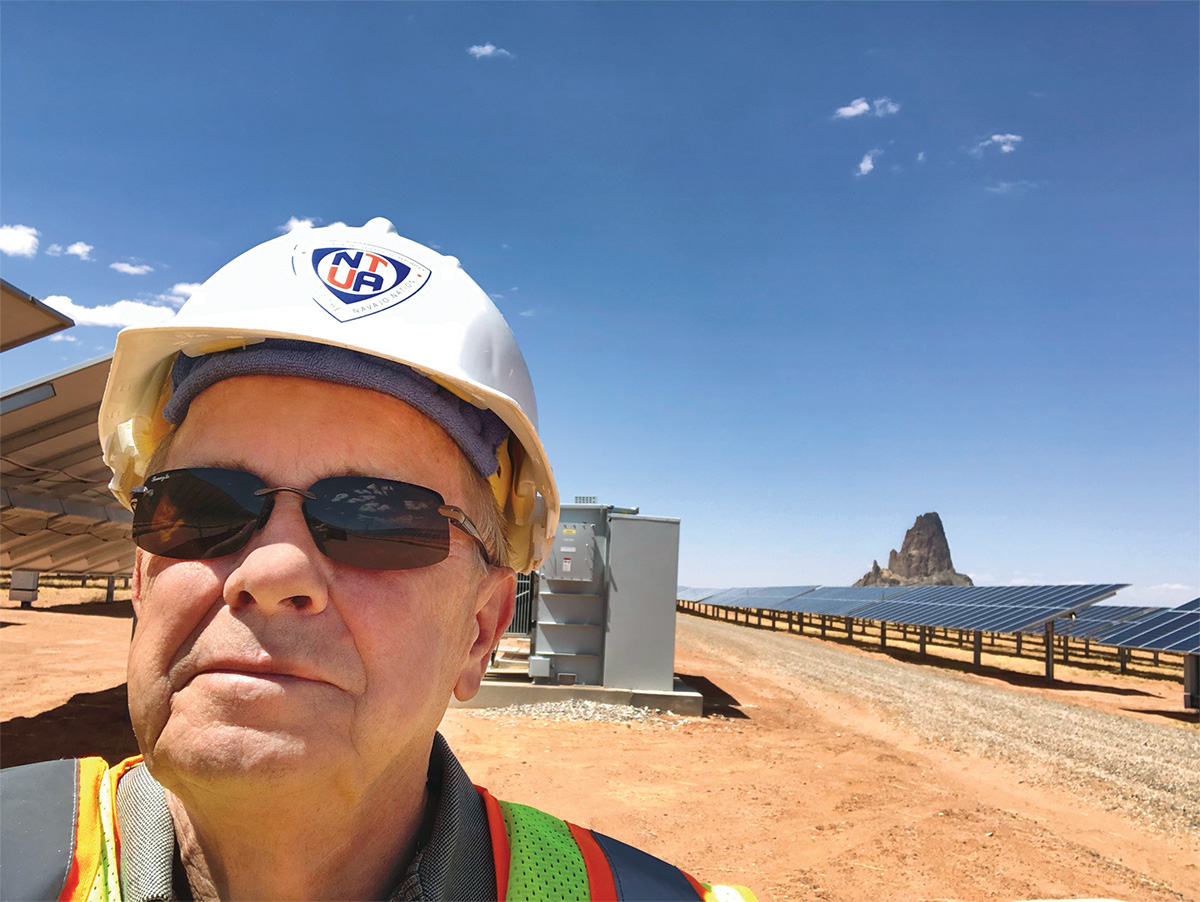
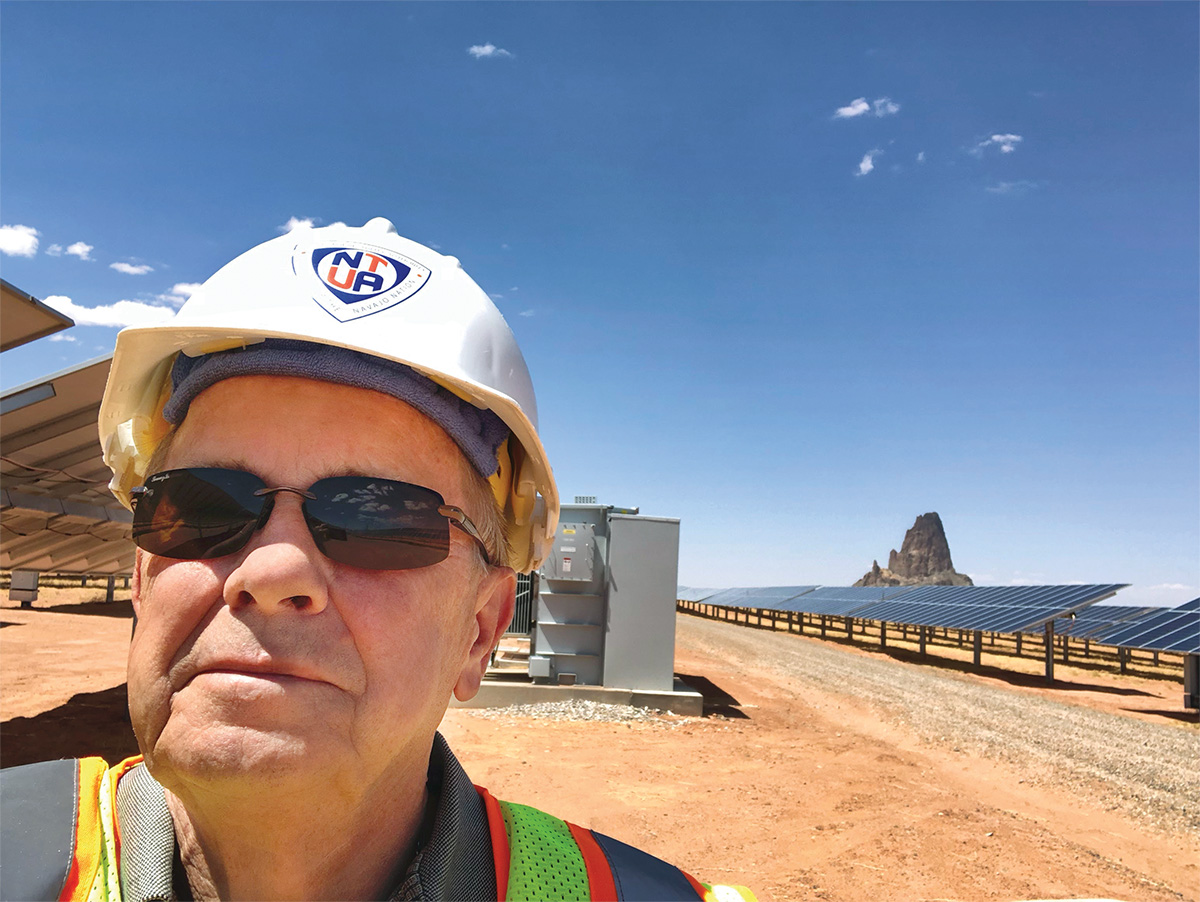
A: In the world of public power, you know pretty much everyone in the industry. I’d led three utilities in California and when I retired and moved back to Arizona, the NTUA asked if I would manage its electric utility. I have broad-based skills and can on any given day address issues with transmission, power supply and equipment. At the same time, they wanted to develop a utility-scale solar energy station and noone
on any tribal nation had done that before.
A: Navajo Nation is 26,000 square miles – the size of West Virginia – and has lots of sunshine and open land. Because of its proximity to the Glen Canyon and Hoover Dams, which generate hydropower for population centers in Phoenix, Nevada and California, we could locate the plant next to major transmission systems. We sell energy and renewable energy credits to major utilities off the reservation that help pay for new infrastructure here. There are still 14,000 families on the reservation without access to power or running water and they are widely dispersed. You might have to build 50 miles of line to pick up three or four houses. It’s expensive.
A: Kayenta I, which opened in 2017, was the first of its kind. It was difficult to get financial institutions to back it, because they were uncomfortable dealing with a sovereign nation with its own rule and laws. The reservation is quite remote, so there is an added cost to bringing in people and heavy equipment. It’s also extraordinarily dusty. The trackers, which follow the sun, and the inverters, which convert DC power to AC, got jammed up. Seven out of 10 inverters, which are half the size of an 18-wheeler, burned out. We replaced them with many smaller units with filtration systems that generate much less heat and dissipate it easily.
A: There was initially a fair amount of hesitation. Family, land and livestock are three very important priorities. Each resident has an allocation of grazing land and you’re asking them to give up these rights. Each case is a different negotiation. With Kayenta I, we were able to convince five families by promising them access to power.
A: Once we proved we could build a utility-scale plant, it made it much easier the next time to construct and finance additional plants. Kayenta II generates 28 MW and Red Mesa in Utah, 72 MW. They provide real benefits. As utilities grow, they create jobs. The unemployment rate on Navajo Nation is extremely high and these are highly valued jobs. They also help keep energy rates stable on the reservation.
A: While I was the CEO of Glendale (CA) Water and Power, we developed and implemented the first smart grid in the nation that integrated both electric and water data, which maximized electricity and water operating efficiencies. The smart grid system served as an example for utilities throughout the nation.
