Fall 2026
By Tracey L. Regan
New Jersey’s newest state park, a future nine-mile greenway extending from Jersey City to Montclair, is coming to life on a former rail line that cuts through an industrial neighborhood in Newark’s North Ward.
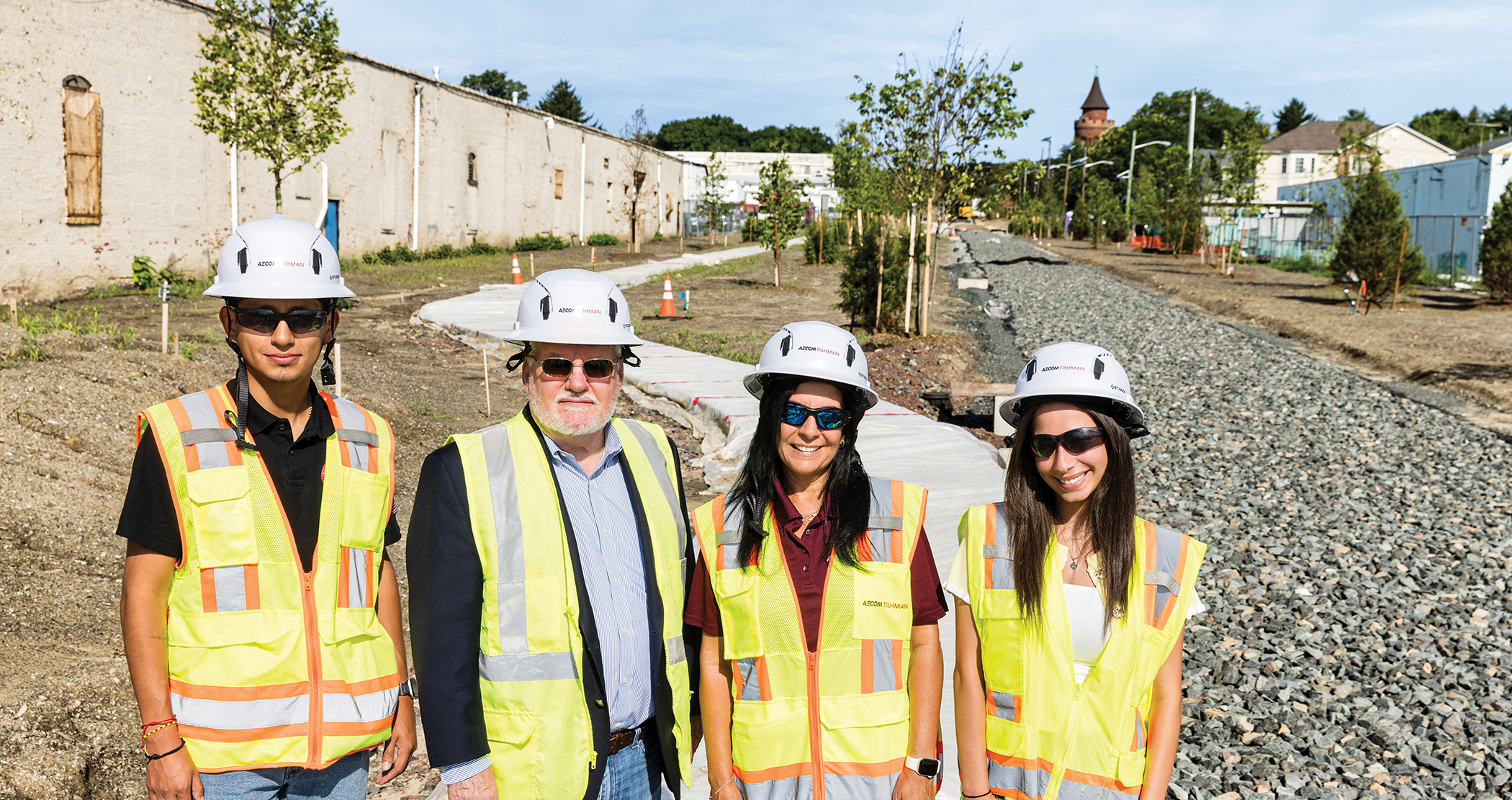
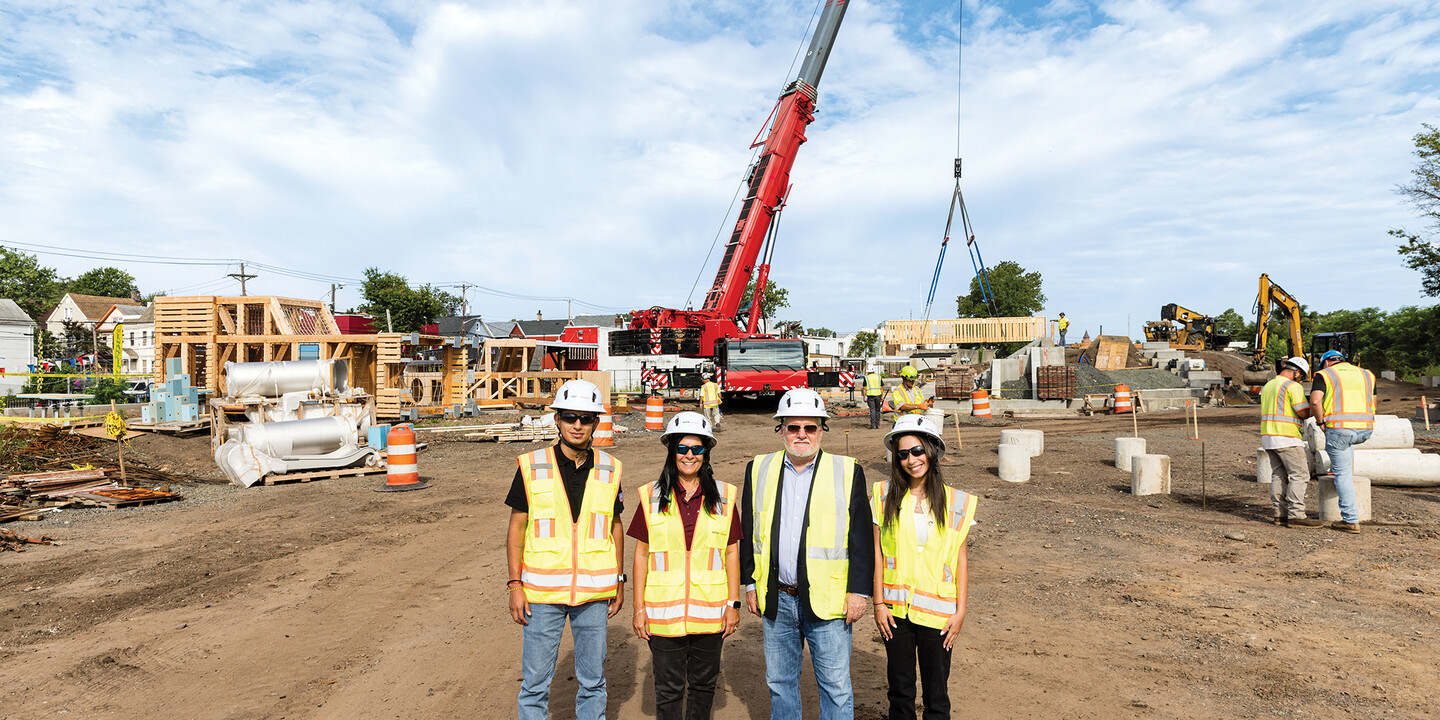
Five NJIT alumni are part of an AECOM Tishman construction management team coordinating the first phase of a remarkable transformation for this underutilized urban space. It promises to bring neighborhood playgrounds and sports courts, walking and bike paths, picnic areas, an observation deck overlooking the Second River in Branch Brook Park and a performance stage. The park will also improve the neighborhood’s air quality and stormwater management, while creating new habitat for animals and birds.
Shortly after breaking ground in the summer of 2025, the team began what it calls a “challenging, detailed, highly designed project” by removing layers —railroad tracks, debris and overgrown brush, more than century-old soils of unknown origins — from the 100-foot-wide corridor.
What’s been most rewarding about the job is creating an entirely new space in the city that also nods to its past use as a freight and passenger line.”
“We’ve done a lot of clean-up,” said Michael Kasian ’85, the company’s executive vice president responsible for New Jersey and Pennsylvania projects. “The railway was last used 20 years ago, and when we started, it was full of trash. People in the neighborhood saw the site as unsafe.”
Rosana Caputo ’99, the senior project manager overseeing the greenway construction, described the process: “It’s a remediation project, considered a brownfield due to its industrial past, so we capped the site. We first dug out and disposed of two feet of historic fill and replaced it with clean material. We then placed an orange-colored fabric barrier over it that serves as a warning barrier for any future digging. Over that, we put down more soil to plant 541 trees, along with thousands of shrubs and ground cover.”
Redeveloping a historic, former industrial site is a challenge, she noted. While peeling back the layers, contractors unearth long-forgotten features. “There were unknowns in the field, such as buried railroad tracks and existing retaining walls that run alongside them,” Caputo recounted.
The New Jersey Department of Environmental Protection purchased the nine-mile corridor in 2022 from Norfolk Southern.
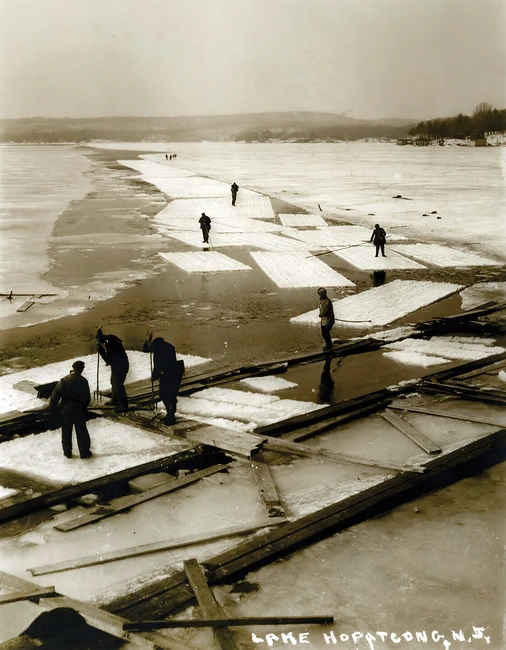
What’s been most rewarding about the job, team members said, is creating an entirely new space in the city that also nods to its past use as a freight and passenger line that hauled, among other goods, iron ore and ice from frozen New Jersey lakes.
In early August, amid cranes and other heavy machinery, visitors could see the outlines of the stage and what will be a sweeping lawn in front of it. Wooden playground equipment, including a 30-foot-tall slide tower and a bridge connecting it to a 7-foot-tall climbing mountain composed of granite blocks, were waiting to be installed. A water play feature is yet to come. Throughout, there are touches that evoke the site’s history.
“There is a ramp with blue blocks to resemble ice, and finishes throughout, such as a screen wall, guard rails and trellises, that will look rusted. The wood will gray over time, to suggest the age of an old site,” Caputo explained.
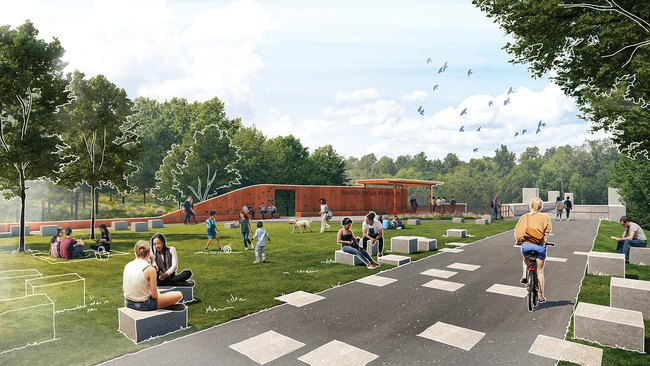
In a section of the park with bike and pedestrian trails and many trees, large granite seating blocks also suggest ice. Those trails will connect the greenway to Branch Brook Park.
To train the next generation of construction engineers, Kasian contacted Marjorie A. Perry ’05, president and CEO of MZM Construction & Management Company, for assistance in staffing. Gira Abdou ’26, a civil engineering major, and Denilson Olivera ’23, a mechanical engineering major, received messages from Perry on Handshake, the NJIT career networking app. Both had impressive construction-related internships while they were students. Would they be interested in working on a landmark project?
Both signed on as project engineers whose daily duties include, among others, record-keeping for all site activities and overall project updates. They keep tabs on contractors’ due dates, ensuring they are on time, and submit the required paperwork. Because the project is funded in part by the federal government, it must be completed on a compressed schedule on time or risk losing that money. The job also entails some problem-solving.
“I had experience testing concrete and soil and that’s important for this project, because there’s a lot of historic fill,” Olivera said. “What has really interested me is looking at project drawings and seeing how they take shape. Drawings are not always perfect. When we first started working on the paths, for example, we realized we had to build up areas to support them.”
Abdou said, “I’d always thought of civil engineering in terms of bridges, roads and buildings. But a park brings so many experiences: building the site from scratch, installing the playground equipment and decorating the overall site with trees and greenery.” The project has inspired her to forge a career in New Jersey that will include public sites. “There are also so many cool places with a lot of potential for new infrastructure, including parks and greenways, because you can never have too much green!”
Keith Adams ’96, a senior project manager on the team, relishes the transformation of his longtime community.
“This project hits home as I currently live in Bloomfield and actually rode on the old NJ Transit Boonton line train when I attended high school,” he recalled. “Seeing it turned into a beautiful park that the community can enjoy and extend into my town is great.”
