Fall 2026
By Theta Pavis
If medicine is a calling, it’s one fueled by intellectual curiosity. At NJIT, many students find the perfect launchpad for standout careers as physicians and other healers. Often they become leaders in their fields — whether it’s researching how to protect brains during surgery, helping medically complex children or reconstructing a wounded veteran’s face, alumni are saving and changing lives.
About 80% of all medical school applicants from NJIT graduate from Albert Dorman Honors College (ADHC). ADHC offers programs in medicine, dentistry, optometry and physical therapy. In the flagship program with New Jersey Medical School (NJMS) at Rutgers-Newark, students earn both a bachelor’s and a doctoral degree in seven years. NJIT is NJMS’ oldest and largest partner and the program has tripled in size over the past 10 years. It’s competitive — in 2025, there were 500 applicants, but only about 15 students are enrolled each year. NJIT also partners with Rutgers School of Dental Medicine.
“We’re a bit of a hidden gem,” said Darshan Desai, director, Pre-Health Programs. “Our program is small and can give personalized attention.” NJIT alumni often score above the 90th percentile in their MCATs and are accepted to some of the most competitive residencies in the country.
ADHC Dean Louis Hamilton said the growth is fueled in part by NJIT’s emphasis on advising and the expansion of the Honors Summer Research Institute. The college also created a medical humanities track — its most popular specialization, with 150 students enrolled.
Students can also choose a four-year, pre-professional bachelor’s degree and then apply to medical school or pursue different programs — such as training to become a physical therapist. Opportunities to do research, work in a hospital or as an EMT, all help give NJIT students a strong foundation.
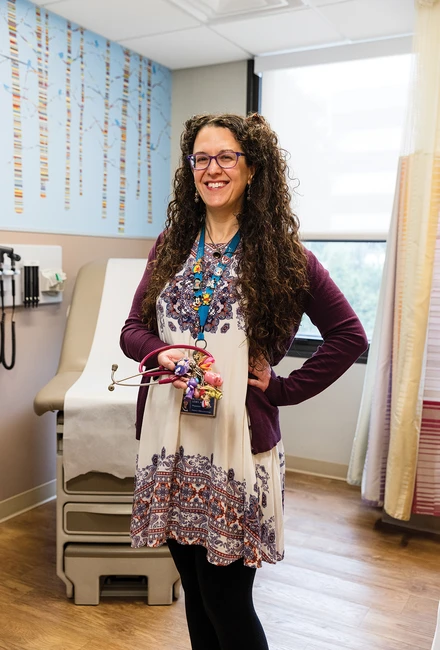
Pediatric gastroenterologist Dr. Alycia Leiby ’98 was doing rounds nine years ago as an attending in the neonatal intensive care unit (NICU) when she was consulted about a premature baby with intestinal failure. The infant girl needed an extensive bowel resection, which left her dependent on intravenous nutrition and a feeding tube for months. “She needed a multidisciplinary approach to her gastrointestinal care,” Leiby said. Leiby became the point person on the case. Besides gastroenterology, the baby required coordination between multiple other pediatric sub-specialties — including neonatology, surgery, nutrition and pharmacy — giving rise to the Neonatal Intestinal Rehabilitation Team at Atlantic Health Goryeb Children’s Hospital in Morristown, N.J., which Leiby now co-directs.
While she also sees a wide variety of general pediatric gastroenterology patients, including those with reflux, poor weight gain and constipation, she specializes in the care of medically complex children with intestinal failure/short bowel syndrome and multiply-disabled kids with feeding tubes, tracheostomies and neurological and congenital heart disease.
Today, that first patient is a thriving 9-year-old girl who loves ballet and princesses.
“With short bowel syndrome, the management of patients has improved over the last 10 years, increasing survival and quality of life. It’s a rapidly advancing field,” Leiby said, explaining that it’s now possible to provide a less toxic form of intravenous fat. New medications are available, including growth hormones for the bowel, which help more patients thrive.
Leiby also performs research and has published in several peer-reviewed journals. “My participation is in industry studies to help bring inflammatory bowel disease medications to pediatric patients,” she said. In addition to her work at Atlantic Health Goryeb Children’s Hospital, she is an assistant professor in the Clinical Educator Track, Department of Pediatrics, at the Sidney Kimmel Medical College of Thomas Jefferson University in Philadelphia.
Leiby first heard about NJIT through a high school math teacher, who encouraged her to attend the university’s pre-college program for girls in STEM. She enrolled as a science, technology and society (STS) major (there was no biology major at the time). She was able to finish her undergraduate work in three years. “STS fit me well. I enjoyed that there was a lot of writing and reading.”
She went on to medical school at UMDNJ (now the Rutgers New Jersey Medical School) and received additional training, including a pediatric gastroenterology fellowship at the Dupont Hospital for Children. Leiby, who grew up in Bergen County, N.J., lived on campus and ran Safe Health, a student club that advocated for health education at NJIT. “The university helped prepare me for the rigors of medical school,” she said. “I was always drawn to pediatrics. There
was never anything else.”
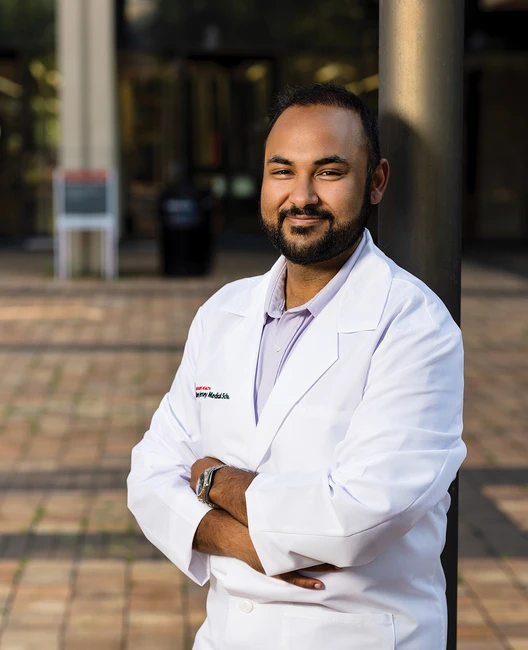
Dr. Anmol Mittal ’16H is devoted to improving public health. As a child, he talked so often about becoming a doctor that his fifth grade teacher gave him a stethoscope at his elementary school graduation. After attending NJIT, he used that stethoscope at Rutgers New Jersey Medical School (NJMS).
Now a gastroenterology fellow at NJMS, he’s pursuing a subspecialization in advanced endoscopy. He’s also completing a master’s in public health (in biostatistics) at the Rutgers School of Public Health, with a focus on health equity. While getting his M.D. from Rutgers, he also did an MBA from the Rutgers Business School, with a dual concentration in strategy/ leadership and marketing. In 2024, he was awarded the NJIT GeNext Young Alumni Award.
“I do a lot of research looking at social disparities,” Mittal said. “My program concentrates on biostatistics and understanding public health and how I can bridge this gap between corporate America, hospitals, the individual patient relationship and public health — and being able to implement change at any of these levels. I want to be able to give back and be a mentor.”
In the long term, Mittal will practice medicine but he is also interested in leadership roles, such as directing a program. “I want to make changes that affect patient care, but also help the whole community,” he said. After Rutgers, he’s headed to an advanced endoscopy fellowship at the Penn State Health Milton S. Hershey Medical Center.
As an undergraduate majoring in biology, pre-medicine/pre-medical studies, Mittal felt at home at NJIT. Initially interested in larger schools, he said NJIT “really taught you to think critically, not just memorize and do. That’s the difference of going to a polytechnic — you are more challenged to learn the theory and apply it.”
Born in India and raised in California and New Jersey, Mittal served as lead undergraduate admissions ambassador and an Honors ambassador. He also worked as an EMT, where he still volunteers on occasion.
“It was awesome to be in a city,” he said. “The ends of the campus are 5 minutes apart, so 8:30 a.m. class was easy, but you never got there fast because you would run into so many friends.” After watching Mittal thrive, his brother Aman also chose NJIT and is currently a Ph.D. student in biomedical engineering.
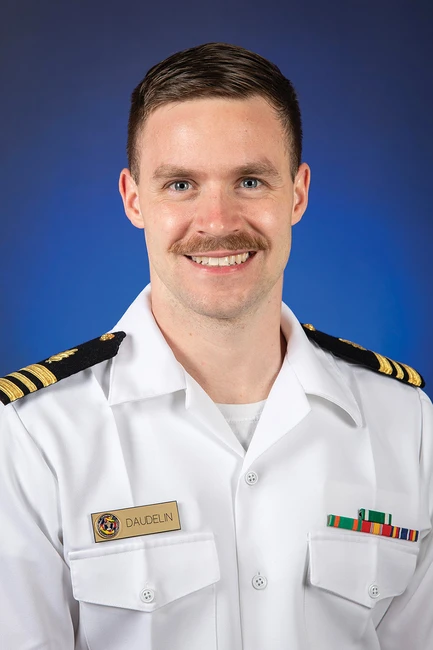
As an undergraduate biology major, U.S. Navy Lt. Cmdr. Dr. Timothy Daudelin ’16 relished the chance to do research, including on colon cancer. Those opportunities, and professors who became mentors, made the road to dental school easier, he said. “It was an amazing experience. I got small group learning in every class that mattered for dental school, and a lot of one-on-one time with really excellent professors.” Daudelin did a double minor in chemistry and applied mathematics and joined the Men’s Cross Country and Track and Field teams; he was later team captain of both.
After graduation, Daudelin joined the U.S. Navy, got a scholarship and landed a spot at the highly competitive Columbia University School of Dentistry. “I like the artistry behind dentistry and that is what initially drew me to it,” he said. “Then I specialized in the areas that require a lot more art, such as head and neck prosthetics.”
Daudelin is a U.S. Navy dentist and specializes in prosthetics and maxillofacial prosthodontics. After Columbia, he did a residency in prosthodontics at the Naval Postgraduate Dental School in Bethesda, Md., where he was awarded the Navy and Marine Corps Commendation Medal. At the Walter Reed National Military Medical Center, he’s been part of a team that treats the nation’s highest VIPs, including presidents. Daudelin provides advanced dental prosthetics to patients, including complex cases in collaboration with the National Institutes of Health. After five years at Walter Reed, he was recently transferred to the Naval Medical Center in Portsmith, Va.
Prosthodontics, he said, is evolving quickly. “One of our recent patients had a war injury involving facial blast injuries. We had to recreate both of his eyes and part of his face with prosthetics. What we were able to do is get a facial scan with everything and digitally CAD the designs we wanted and we mirrored his face and recreated some of the anatomy on the side that was missing. Then we printed everything and were able to make adjustments in real time before processing everything with traditional means and hand painting things like the irises — it was a blend of traditional and digital dentistry as well.”
It’s meaningful work. “You are seeing people at some of the lowest points of their lives and it is very rewarding to give them some function again. Just being able to swallow water or go outside without people looking at them — it is so rewarding.”
Daudelin is one of 10 children, all of whom are Highlanders. Peter, his youngest brother, is currently a junior majoring in computer science. His brother Issac ’14 graduated from an M.D/Ph.D. program at Rutgers. Daniel ’19 studied biology and went on to study neuroscience at Johns Hopkins School of Medicine; he recently finished a Ph.D.
“NJIT has been really incredible to us and every one of us has thrived there,” Daudelin said.
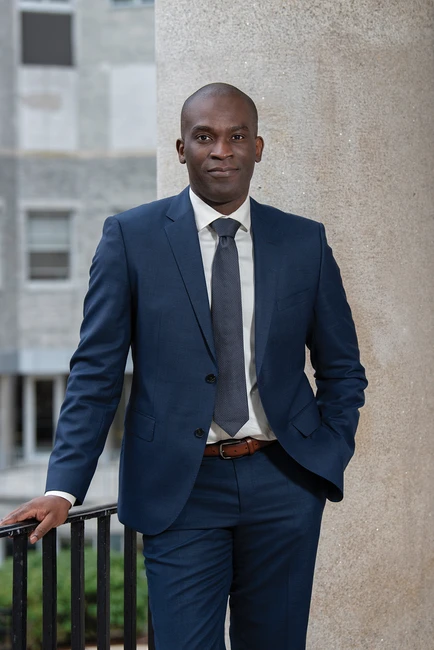
As a clinical neuroscientist, Seun Johnson-Akeju ’01 focuses on understanding the anesthetized brain. He is anesthesiologist-in-chief and chair of the Department of Anesthesiology at Mass General Brigham and the Henry Isaiah Dorr Professor of Research and Teaching in Anaesthetics and Anaesthesia at Harvard Medical School, where he leads a research lab at Massachusetts General Hospital. Born in Lagos, Nigeria, he came to the U.S. as a teenager. He’d already completed high school, and after a year at Essex County College enrolled at NJIT and then got his M.D. from the Rutgers New Jersey Medical School. He completed a residency at Massachusetts General Hospital and did postdoctoral training in regenerative biology at Harvard University. He also has a Master of Medical Sciences from Harvard Medical School and an MBA from MIT.
Q: What drew you to anesthesiology?
A: The neural basis of consciousness drew me to the specialty. I had always been drawn to the brain, and anesthesiology is the one field of medicine in which we safely and reversibly turn human awareness off and bring it back, many times each day. That is a profound clinical responsibility, since we care for patients at their most vulnerable. It is also an extraordinary scientific opportunity to study that very question, how consciousness arises in the brain and how anesthetics can reversibly suspend it. Anesthesiology let me be both the physician at the head of the bed and the scientist studying what that transition can reveal.
Q: Can you tell us more about your research?
A: Every day, tens of thousands of people undergo anesthesia and surgery, and my laboratory views that experience as a rare window into the living human brain. Cognition is central to who we are, yet we still do not fully understand how it emerges from molecules through to neural circuits. The perioperative period can act as a stress test for the brain, revealing vulnerabilities that are not apparent at rest, much as a cardiac stress test can uncover heart disease that is otherwise hidden. In some patients, particularly older adults, those vulnerabilities surface after surgery as delirium in the short term or as longer-lasting changes in memory and thinking. By studying how the brain responds during this period, we hope to understand the underlying biology, with the ultimate goal of developing therapies that protect brain health. Put simply, we want every patient, regardless of age, to wake up as themselves.
Q: Why NJIT?
A: I was drawn to NJIT above all by its quantitative rigor, though it also helped that every matriculating student was given a computer in those days, at a time when personal computers and home internet access were far from universal. The curriculum I chose gave me a strong foundation in quantitative science, including calculus I through III, linear algebra and mathematical biology. Those courses proved to be far more than requirements. Linear algebra and the manipulation of matrices, in particular, became working tools in my research. Earlier in my career, I used EEG to understand how the brain works, and that work rested directly on those methods. I no longer do that quantitative neuroscience, but the same habits of mind still shape how I approach data today, whether I am analyzing it myself or supervising its analysis, and whether it comes from a clinical trial or a molecular study. The line from those early classes to my current work is a direct one.
Q: What fueled your interest in medicine and science?
A: One professor from those years stands out. Dr. G. Miller Jonakait had us read original papers in developmental biology, including the work of Christiane Nüsslein-Volhard on the genetic control of early development. Engaging directly with the primary literature, rather than textbook summaries, showed me how discoveries are actually made and made me want to do that work myself. In many ways, she seeded and nurtured my love of science.
Another memorable person was Tony Howell, who led the Educational Opportunity Program. I am one of many students who owe him a debt of gratitude for recognizing potential before it announced itself and for opening doors that would otherwise have stayed closed. In my case, he introduced me to Dean Soto Greene at New Jersey Medical School, an introduction that helped set me on the path to medicine.
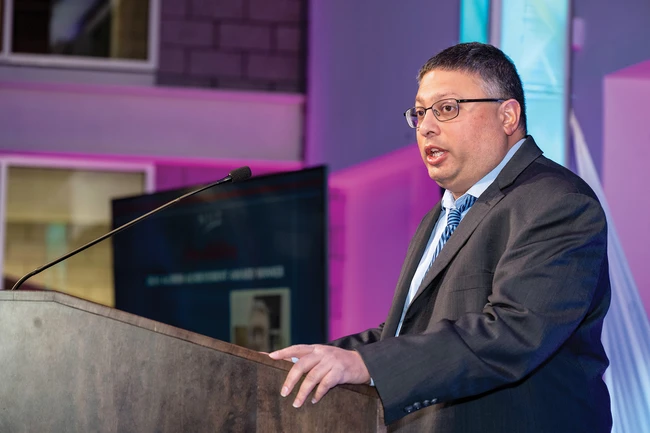
The friends Kaustubh G. Joshi ’97 made at NJIT have been a constant in his life. He’s worked for the past 11 years as a professor of clinical psychiatry at the University of South Carolina Floyd School of Medicine (USC FSOM), but flew to New Jersey this summer to see those friends from NJIT.
“They’re all engineers,” he said with a chuckle. “But they have always been there for me.” Joshi, who grew up in New Jersey and Texas, got interested in medicine early. A high school valedictorian, he enrolled in NJIT as an engineering science major in the Honors College. He minored in applied math and enjoyed living on campus. While at NJIT, he received the U.S. Air Force (USAF) Health Professions Scholarship, which covered his medical school tuition at Rutgers New Jersey Medical School.
Joshi pursued his graduate medical education while simultaneously serving his USAF active duty service commitment.
He completed his four-year general psychiatry residency training at the University of Texas Health Science Center at San Antonio and then a one-year fellowship training in forensic psychiatry at USC FSOM. During his time in the USAF, Joshi was deployed to Iraq for approximately six-and-a-half months in support of Operation Iraqi Freedom. He was also part of the tri-service team tasked with interviewing the 2009 Fort Hood mass shooter for his court-ordered criminal forensic evaluations. Overall, he served 12 years in the USAF. The recipient of several national teaching awards and author of over 100 publications, Joshi was honored by NJIT in 2024 with an Alumni Achievement Award.
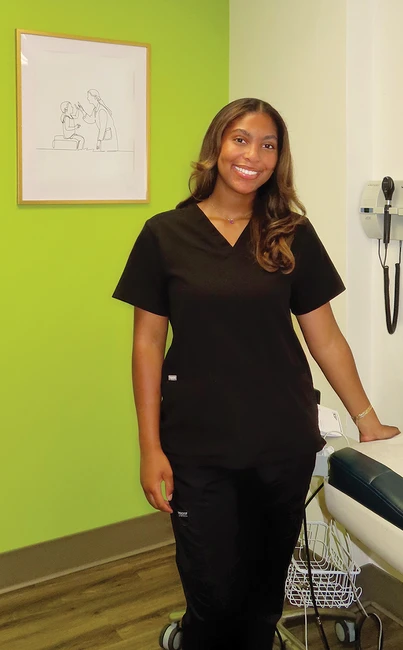
Victoria Daniels ’28 a junior from Clifton, N.J. was in eighth grade when COVID-19 hit. Already interested in medicine, during the pandemic she began researching a career as a physician’s assistant (PA). At NJIT, she was admitted to the Honors College (transferring from Seton Hall University) and enrolled as a biology major in the pre-Physician Assistant track. She also got involved in campus clubs — including WISH, the Women’s Initiative for Supportive Healthcare. “I really like the profession, the core curriculum at NJIT and the opportunities,” she said. Daniels said NJIT — where two of her siblings attended — has helped her network with PAs and even shadow several doctors.
Dr. Frank Femino ’85, chief of orthopaedics at Clara Maass Medical Center, is a member of the Albert Dorman Honors College Board of Visitors and a long-time supporter of NJIT.
Dr. Paulo Pinho ’96H, an important voice for health care in New Jersey’s Portuguese community, is vice president and medical director of Innovation for Diameter Health. He is a member of the Albert Dorman Honors College Board of Visitors and a long-time supporter of NJIT.
Dr. Humaira Chaudhry ’01H, ’05, chair and professor of radiology at Rutgers New Jersey Medical School, was recently honored by the Albert Dorman Honors College for her community service.
In addition to the New Jersey Medical School, NJIT has partnerships with several other institutions, including Rutgers School of Public Health, State University of New York School of Optometry and the American University of Antigua School of Medicine.
